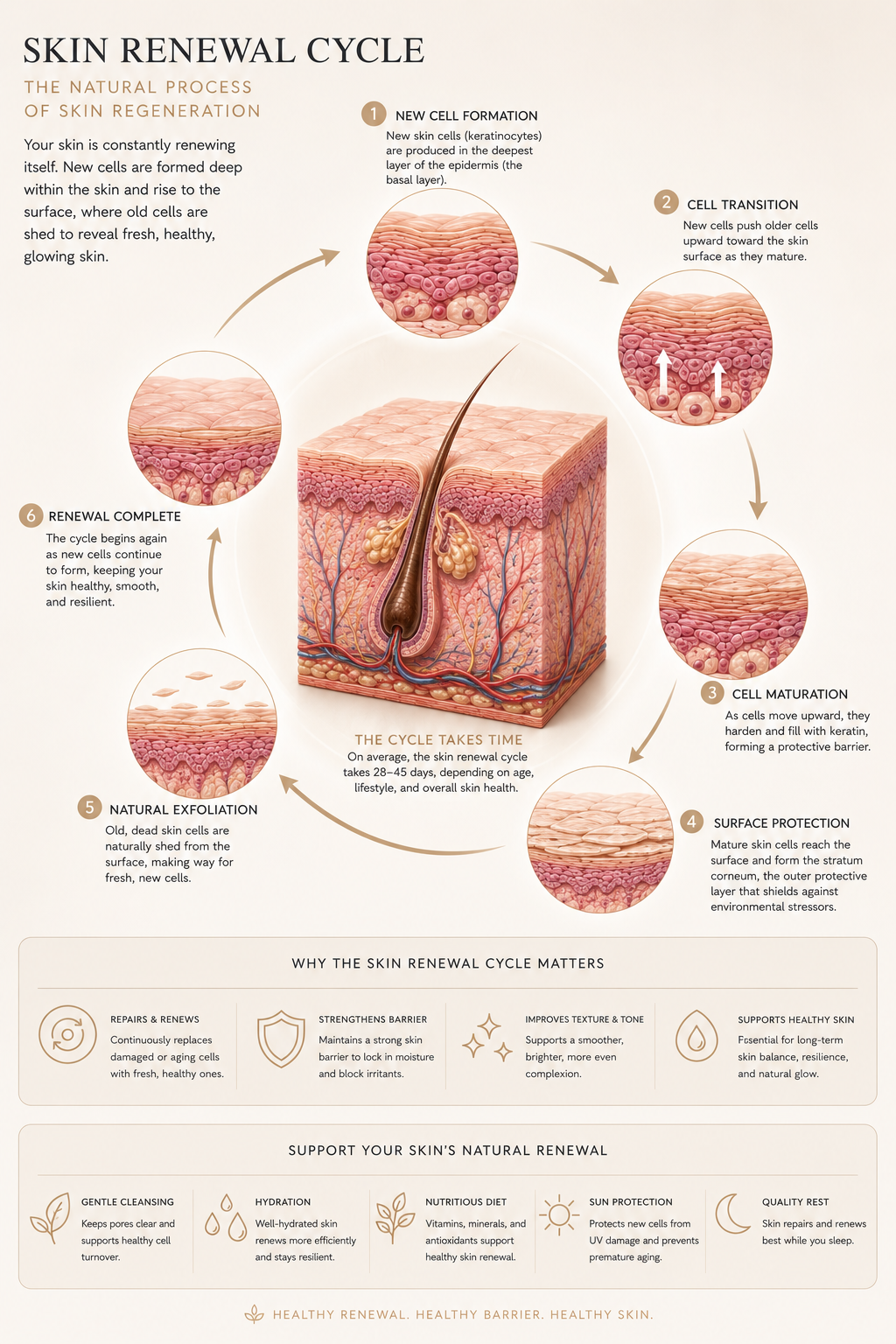
Structure & Layers
Skin Anatomy
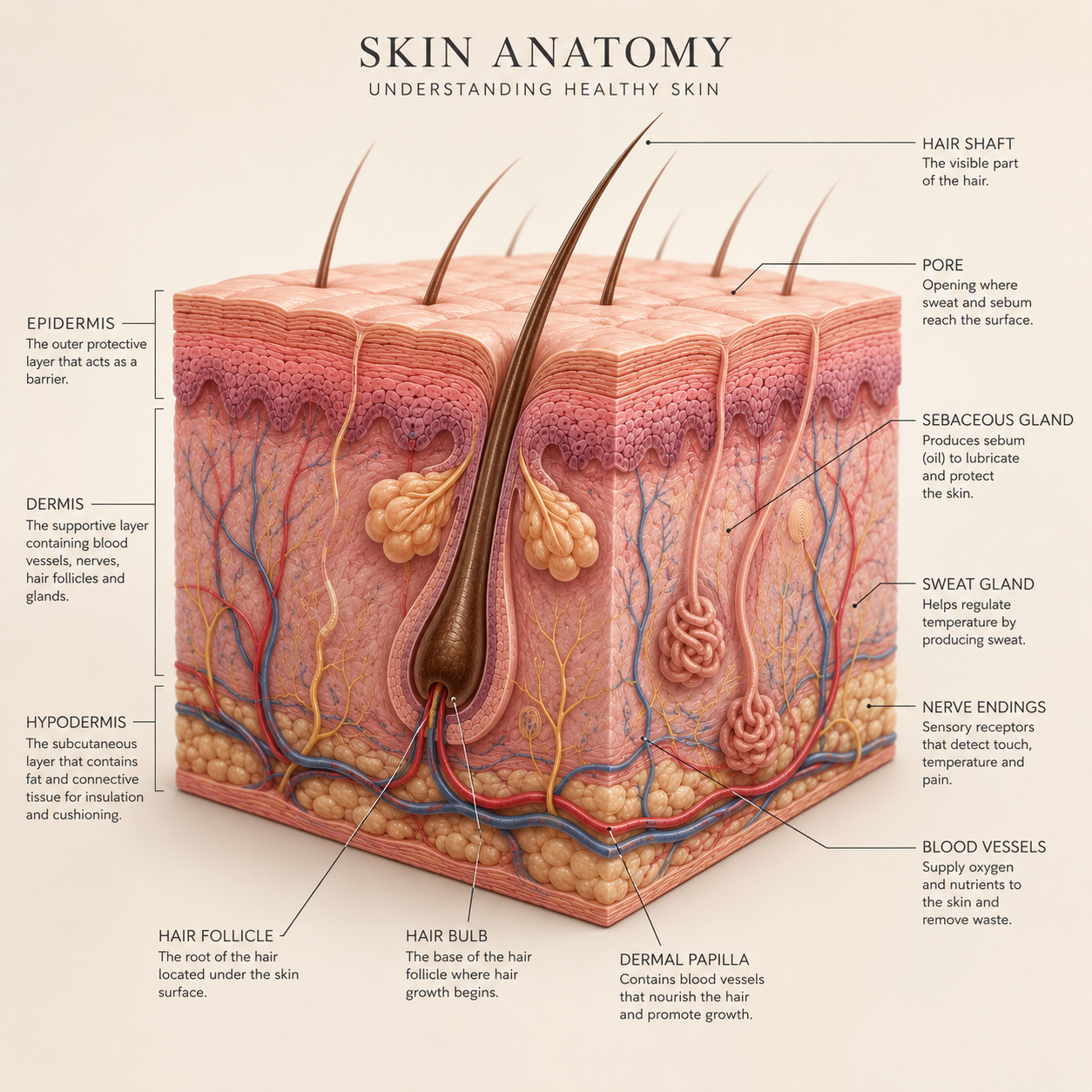
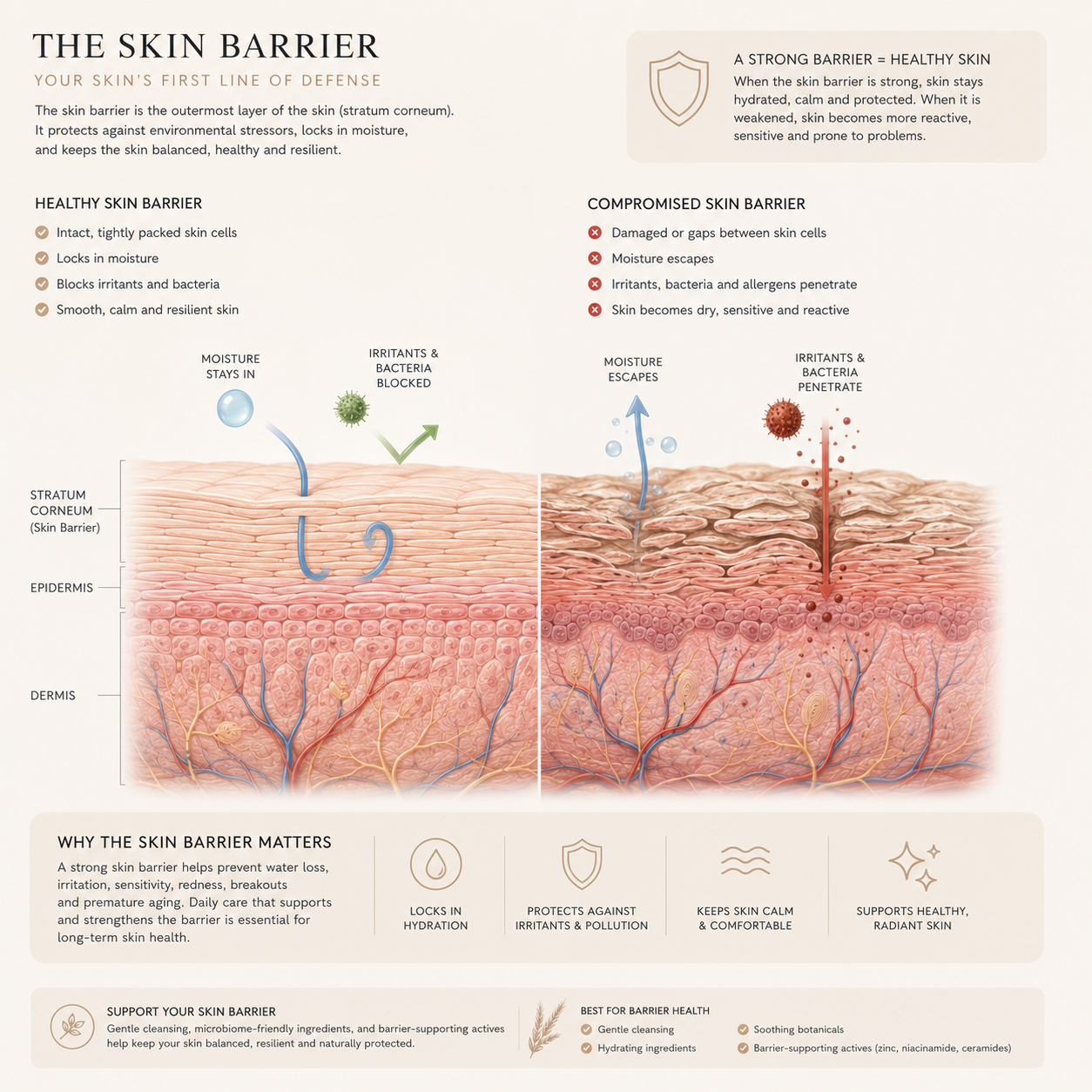
The skin is the body's largest organ and acts as a protective barrier between the body and the outside world. It is made up of several interconnected layers that help retain moisture, regulate temperature, protect against environmental stressors, and support the skin's natural renewal process.
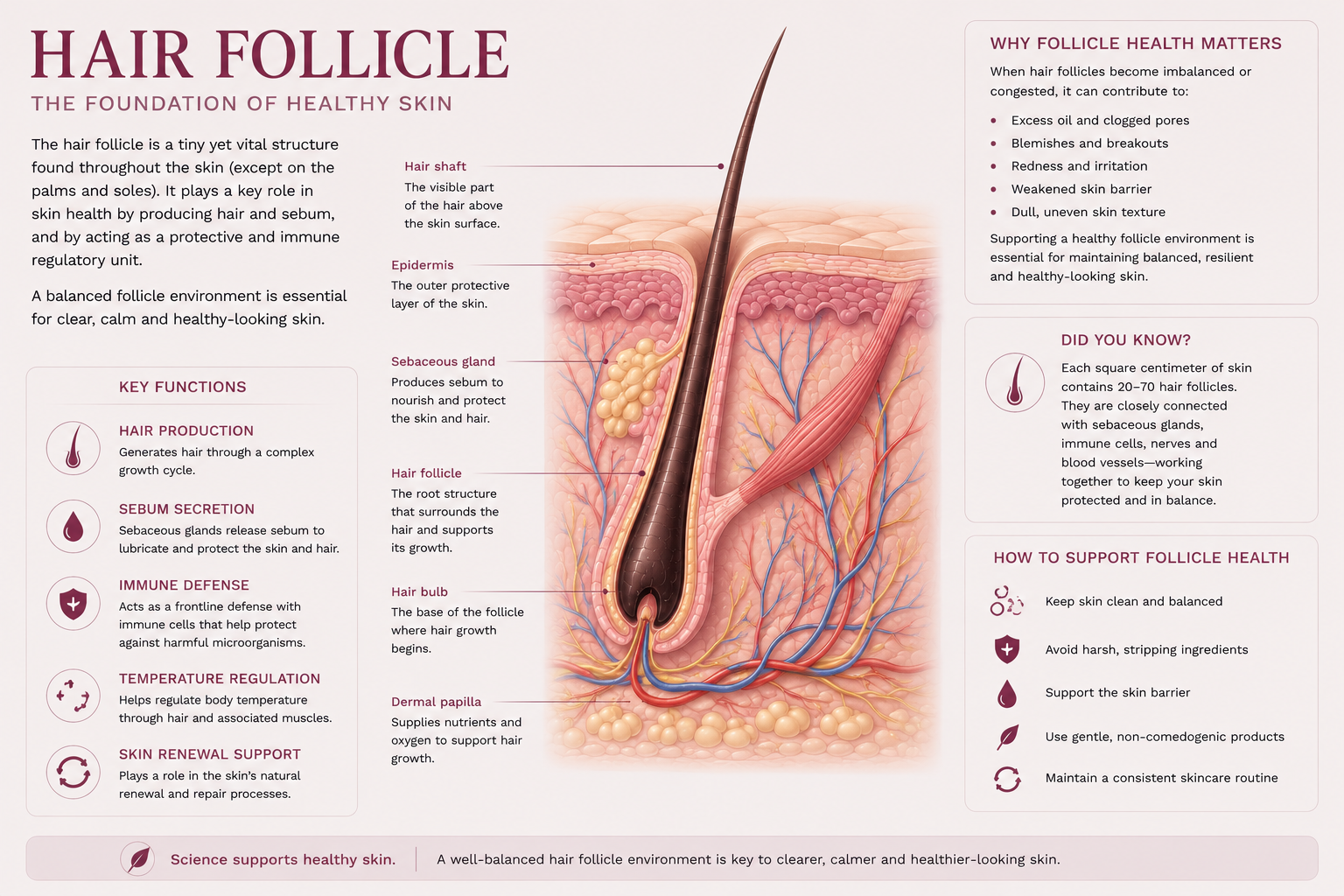
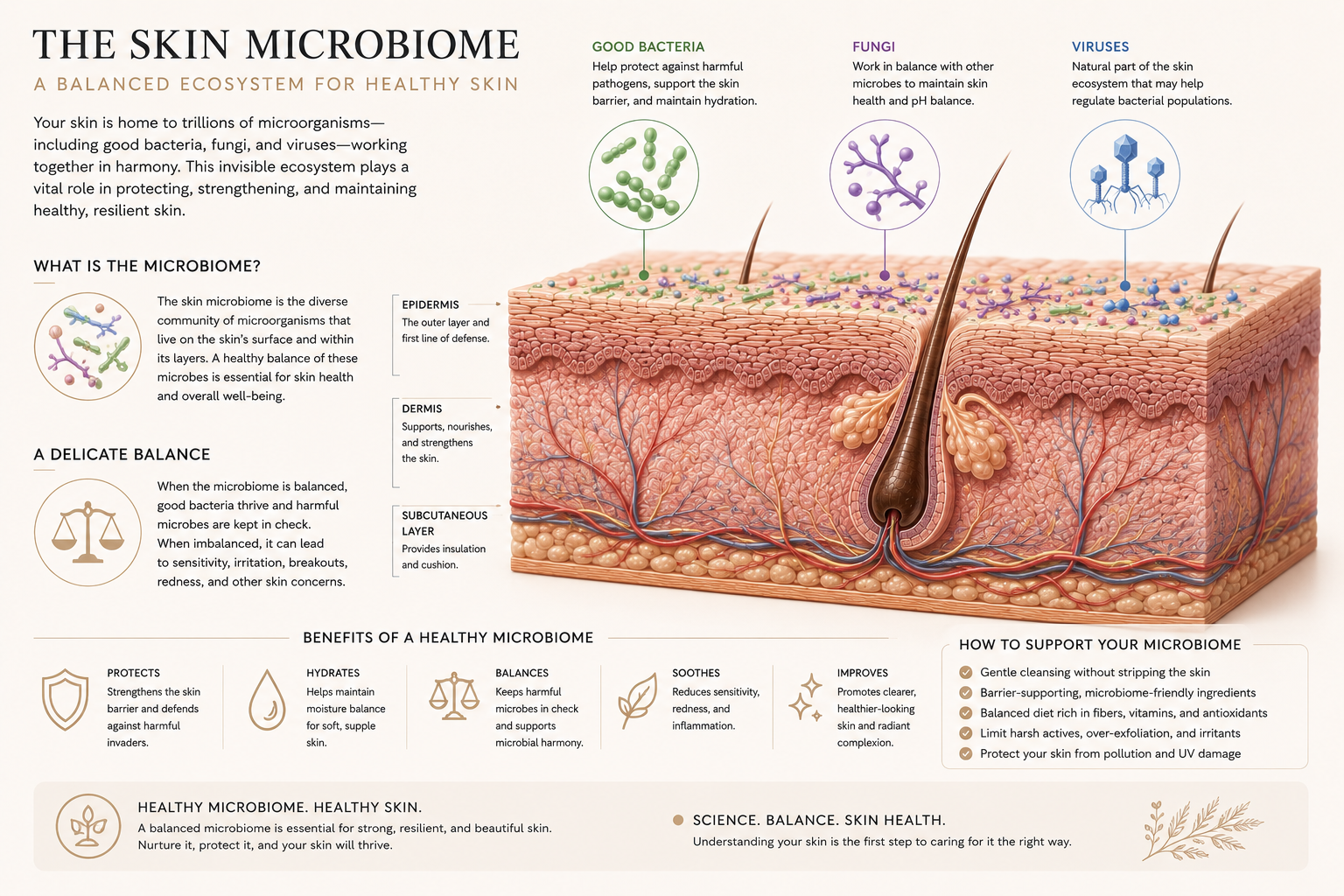
The three main layers are the epidermis, dermis, and hypodermis (subcutaneous layer). Hair follicles, sebaceous glands, blood vessels, nerves, and microscopic organisms—including Demodex mites—form part of this complex skin ecosystem.
Understanding how these structures work together helps explain why maintaining the skin barrier, microbiome, hydration, and natural oil balance is so important for healthy-looking skin.
Key Facts: Skin Anatomy
- • The epidermis forms the skin's outer protective barrier.
- • The skin barrier helps retain moisture and prevent excessive dryness.
- • The skin microbiome supports the skin's natural defense ecosystem.
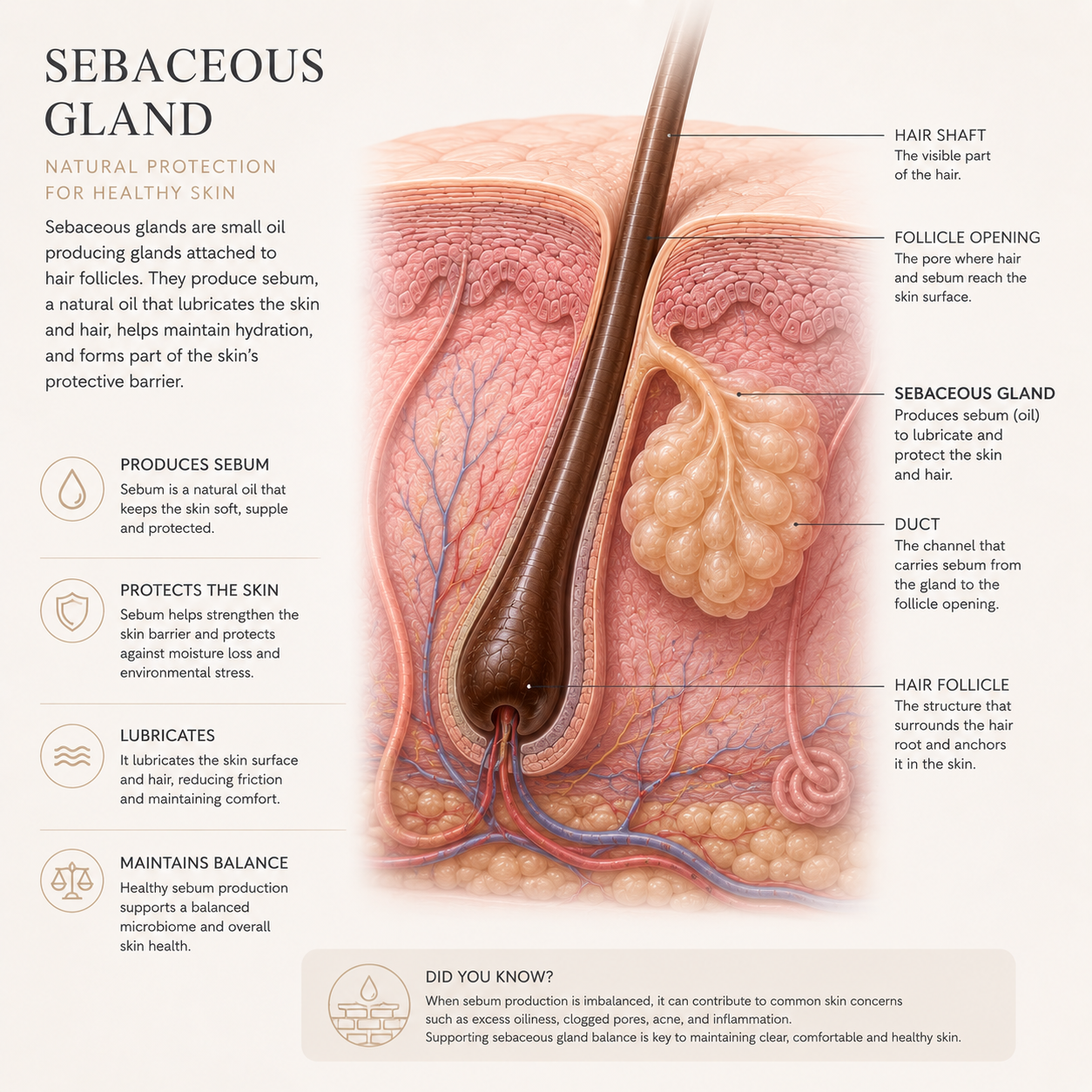
- • Sebaceous glands produce sebum to help condition and protect the skin.
- • Hair follicles provide a natural microscopic habitat for Demodex mites.
- • Healthy skin structure supports a smoother, more resilient-looking complexion.
Educational Note: This information is provided for educational purposes and is not intended to diagnose, treat, cure, or prevent any medical condition.