Rosacea
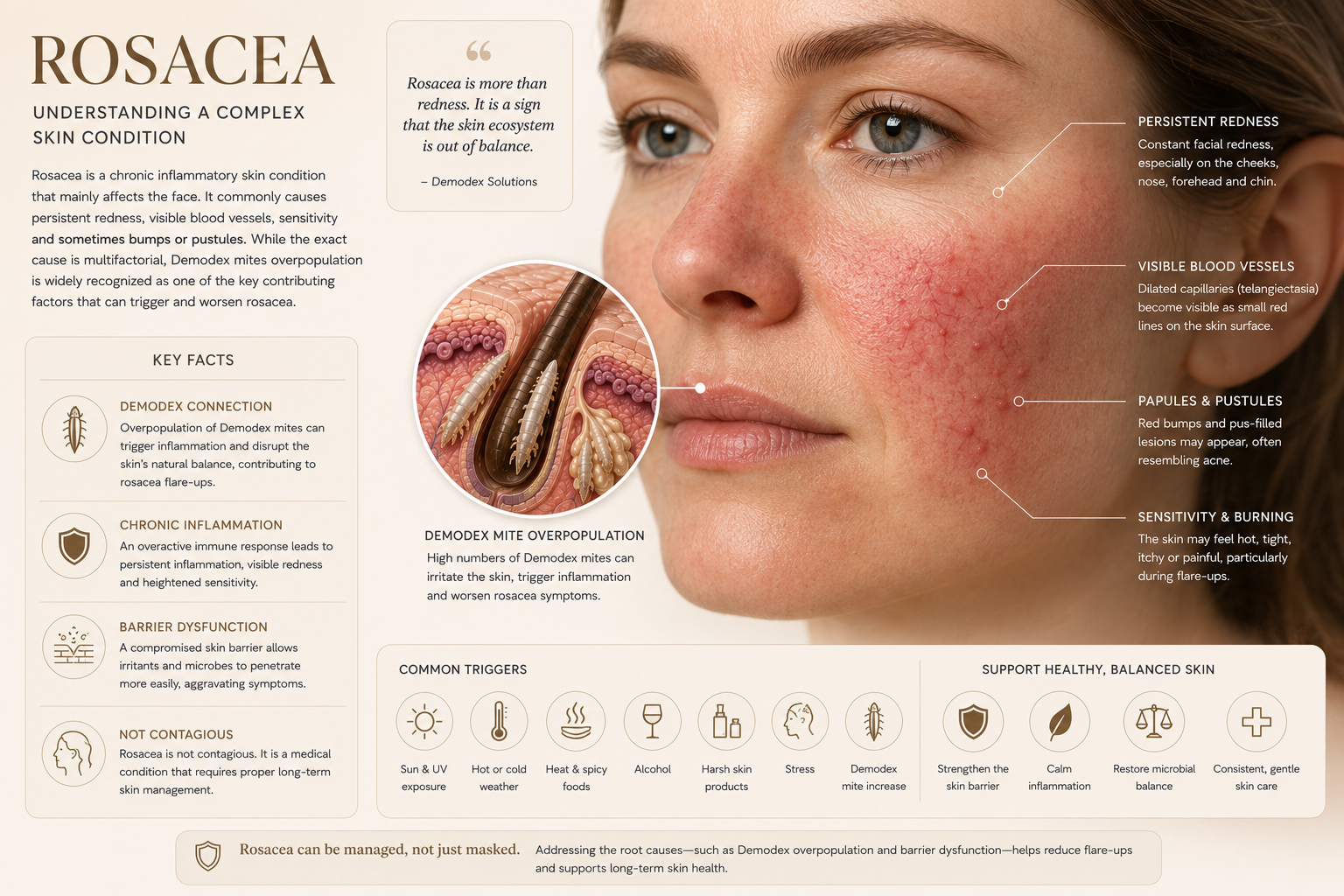
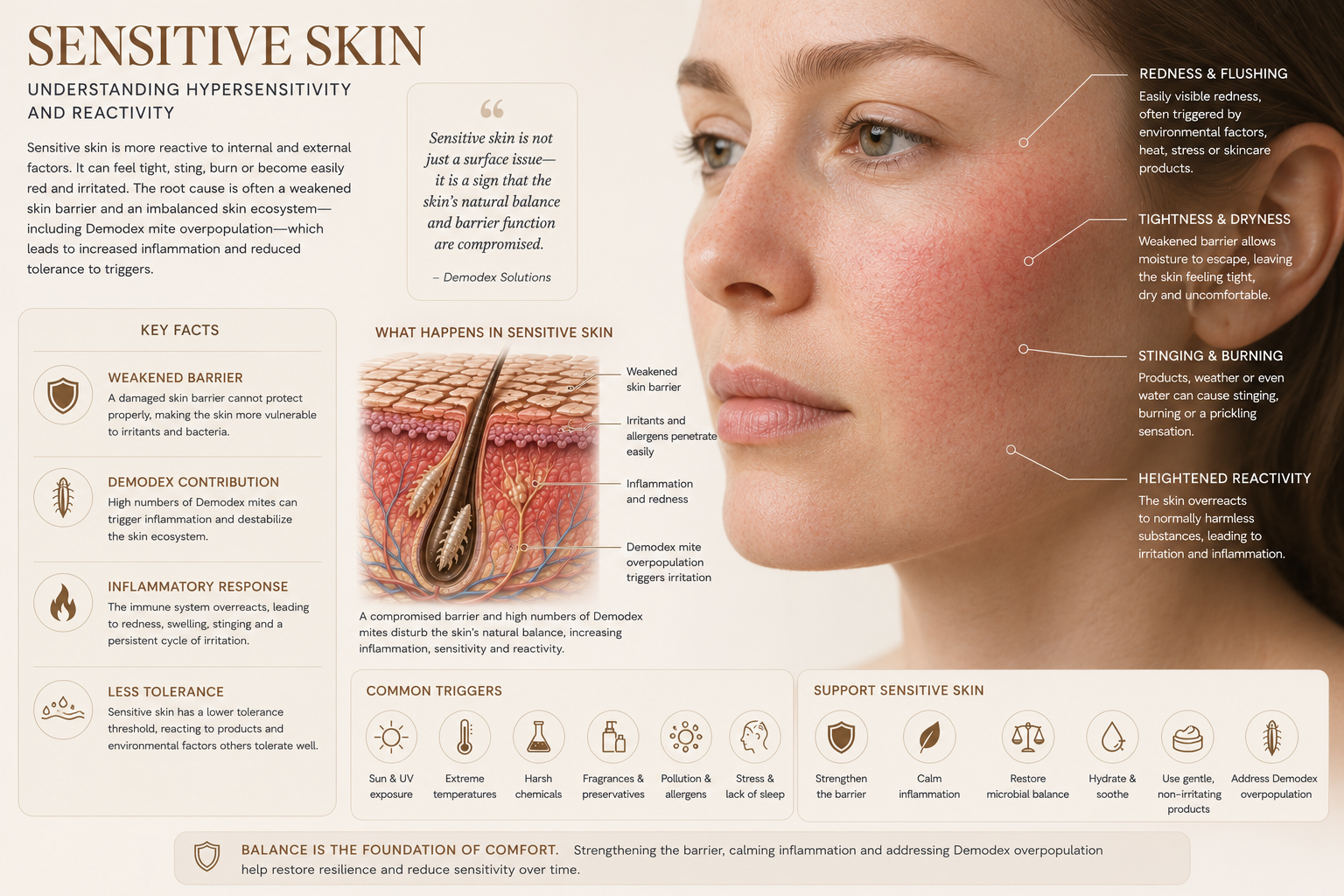
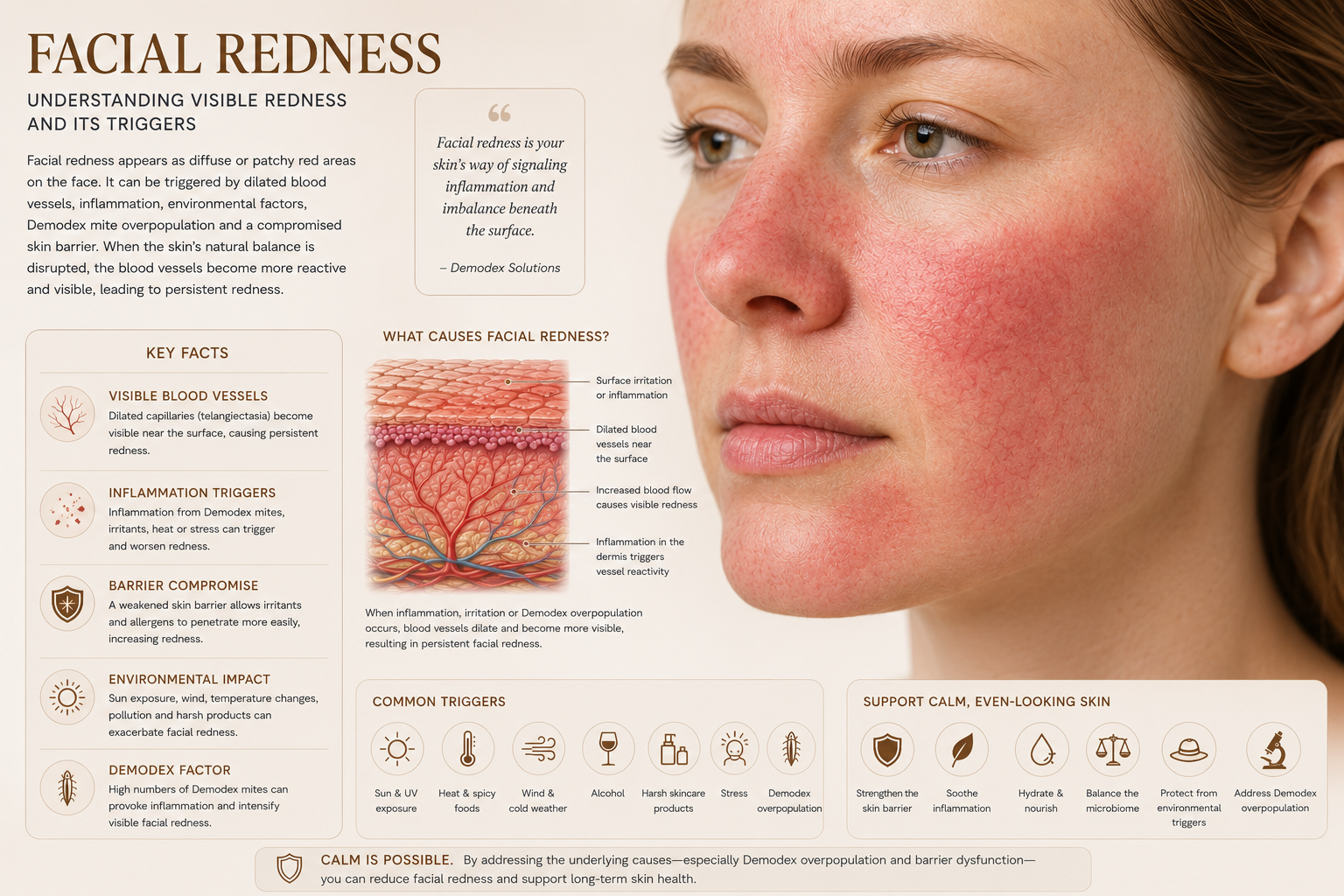
Rosacea is a common, long-term inflammatory skin condition that primarily affects the central areas of the face, particularly the cheeks, nose, chin, and forehead. Common signs include persistent facial redness, episodes of flushing, visible small blood vessels, and in some individuals, acne-like bumps or pustules. The skin may also feel sensitive, warm, dry, or prone to burning and stinging.
The development of rosacea is complex and is thought to involve several interacting factors, including immune and vascular responses, genetic susceptibility, environmental triggers, changes in the skin barrier, and alterations within the skin's microbial and follicular environment.
Demodex mites are of particular interest in rosacea research. These microscopic mites normally live within facial hair follicles and sebaceous areas and are commonly present on healthy adult skin. However, numerous studies have found significantly higher Demodex densities in people with rosacea, particularly in papulopustular forms of the condition. Demodex may therefore be an important contributing factor in the inflammatory and follicular environment associated with rosacea in some individuals, although increased mite density does not mean that Demodex is the sole cause of rosacea.
Rosacea triggers and contributing factors vary considerably between individuals. Commonly reported triggers include sunlight, heat, cold or wind, emotional stress, alcohol, spicy foods, and irritating skincare products. A gentle, well-tolerated skincare routine, appropriate sun protection, and attention to the skin's follicular and microbial environment can help support skin comfort while minimizing unnecessary irritation.
Key Facts: Rosacea
- • Rosacea primarily affects the central areas of the face, including the cheeks, nose, chin, and forehead.
- • Common signs include persistent redness, flushing, visible blood vessels, sensitivity, and sometimes acne-like bumps or pustules.
- • Research has repeatedly found significantly higher Demodex densities in people with rosacea compared with people without the condition.
- • Demodex may contribute to the inflammatory and follicular environment associated with rosacea in some individuals, but it is not considered the sole cause of the condition.
- • Gentle skincare, sun protection, and identifying individual triggers can help support sensitive, rosacea-prone skin.